

Every major leap in human civilization has been accompanied by a fundamental transformation in manufacturing capabilities. From bronze to steel, and from cast iron to magnesium alloys, the evolution of materials has shaped our tools and defined entire eras. Today, humanoid robots are moving from science fiction into reality. How far they can go will depend not only on the intelligence of their algorithms, but also on the reliability of their manufacturing.
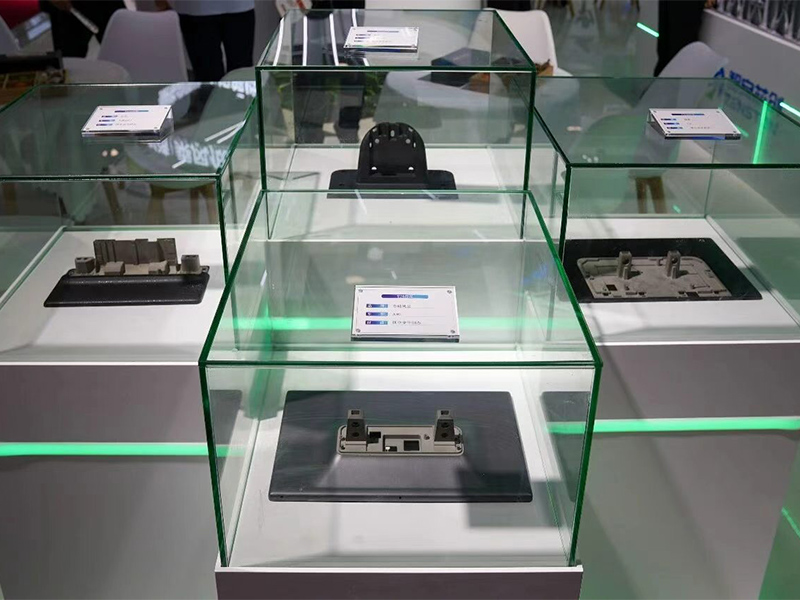
On July 8, at Booth N2-C10 at the Shanghai New International Expo Centre, magnesium alloy robot components exhibited by Bida New Energy, a subsidiary of Xinbo, drew considerable attention from industry visitors. The exhibits included upper-arm outer housings, upper-arm inner housings, and elbow connecting links.
A few days earlier, Tesla Vice President Tao Lin revealed at the Global Digital Economy Conference in Beijing that mass production of the Optimus humanoid robot was planned to begin by the end of 2026, with a long-term target of one million units annually. In a post on July 1, Elon Musk also confirmed progress on the production line at the Fremont factory, while acknowledging that initial production would be extremely slow.
One million units is a figure worth watching.
According to a Goldman Sachs research report, if shipments reach one million units in 2027, upstream supply-chain companies could see market-capitalization gains equivalent to 2.0–2.6 times their current value. This signals a shift for humanoid robots from technology demonstrations to industrial competition. The contest is no longer just about algorithms and movement capabilities, but also about who can establish a mature manufacturing system first and turn prototypes into commercially available products manufactured at scale. This shift has quickly reached the upstream supply chain. At this year's aluminum industry exhibition, robotic arms, joint connectors, and precision housings appeared at an increasing number of booths. Aluminum and magnesium alloy components previously used in automotive, consumer electronics, and other industries are finding new applications.
In response to this shift, Xinbo is extending the application of its lightweight materials and precision manufacturing capabilities into robotics.
1. Magnesium Alloys: Why Are They an Answer to Robot Lightweighting?
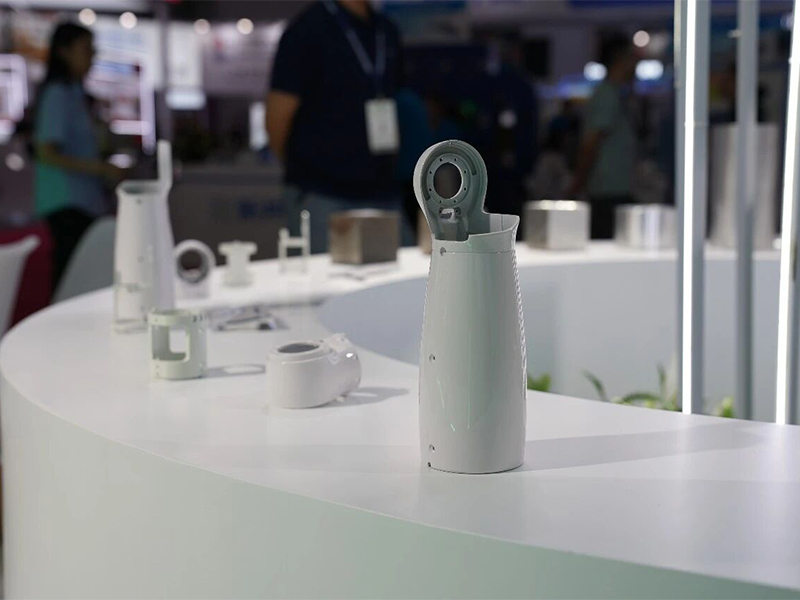
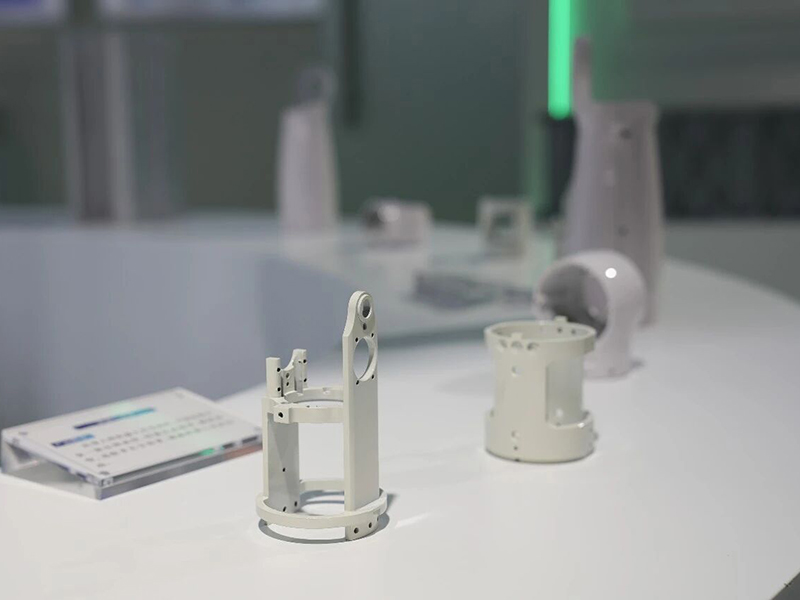
At this year's exhibition, Bida New Energy showcased robot joint components including upper-arm inner housings, upper-arm outer housings, and elbow connecting links.
The upper-arm inner and outer housings and elbow connecting links are all made from AZ91D magnesium alloy. They are formed using a 350-ton semi-solid die-casting machine, followed by CNC machining of critical features such as mounting surfaces and connection holes. Although the elbow connecting link is relatively small, it must simultaneously meet requirements for structural strength, hole-position accuracy, and assembly fit, placing more exacting demands on both forming and subsequent machining.
Why magnesium alloys? Their density is approximately 63% that of aluminum alloys, with a tensile strength of 230–255 MPa, a yield strength of 155–170 MPa, and an elongation of 4%–7%. In moving components such as robot joints, magnesium alloy joint modules can weigh 20%–30% less than their aluminum alloy counterparts. For robots that move frequently, this substantial weight reduction, while maintaining strength, means lower energy consumption and longer operating time.
2. Building an End-to-End Component Manufacturing System, from R&D and Design to Finished-Product Delivery
Turning material advantages into actual products requires validation through structural forming, dimensional control, and volume production.
Supported by platforms including the Anhui Provincial Key Laboratory of Lightweighting Technologies for New Energy Vehicles and the Laboratory for Highly Integrated Die-Casting Technology, Bida New Energy has established a rapid innovation mechanism spanning material R&D, process optimization, and product iteration. It has built a complete manufacturing system covering R&D and design, die casting, precision CNC machining, pretreatment and passivation, automated powder coating, and environmental treatment processes. This enables the company to provide one-stop customized manufacturing services, from product development to finished-product delivery, tailored to customer requirements.
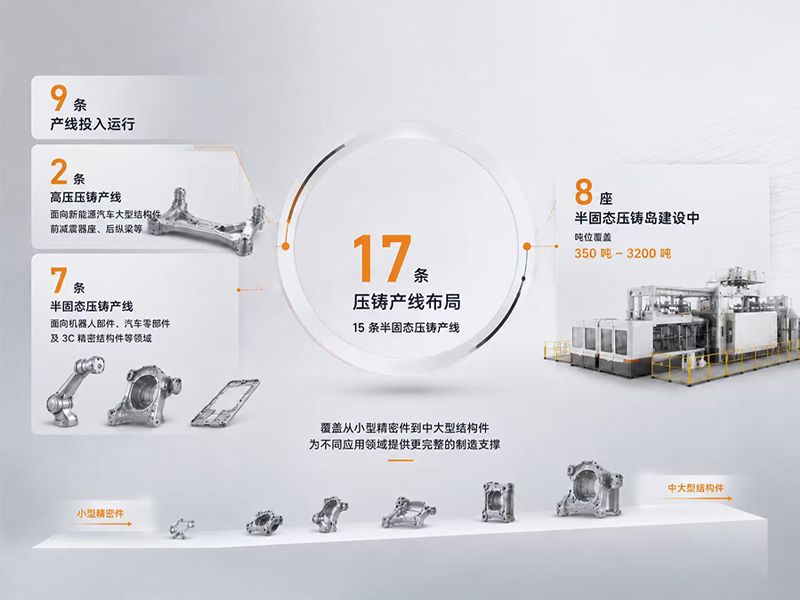
The company is moving forward with plans for 17 die-casting production lines, including 15 semi-solid die-casting lines, nine of which are already operational. Once fully completed, Bida New Energy's semi-solid die-casting capabilities will cover everything from small precision parts to medium and large structural components, providing more comprehensive manufacturing support across different application areas.
3. Entering Robotics with Experience in Automotive Structural Components
In the new energy vehicle sector, Bida New Energy already supplies multiple automotive OEMs and component manufacturers. Developing automotive components is itself a continuous process of refining the interaction between materials, structures, molds, forming, and machining. While production lines and equipment expand the scope of manufacturing capabilities, Bida New Energy's expansion into robotics is grounded in its accumulated experience in automotive components. Moving from automotive structural parts to robot components changes the product forms and development cycles, while maintaining the same systematic requirements for materials, processes, and manufacturing capabilities. Bida New Energy is translating its existing automotive lightweighting experience into the ability to develop new products for robotics.
4. As Opportunity Arrives, the Answer Lies in the Components
As Optimus places the million-unit target on its mass-production roadmap, the question facing the supply chain is shifting from whether a solution exists to whether that solution can actually be turned into a product. Competition in humanoid robotics will extend beyond algorithms and models. As the industry moves toward mass production, molds, equipment, processes, and every critical component must undergo repeated validation and ultimately withstand the test of volume manufacturing.
The upper-arm housings, elbow connecting links, and precision housings on display today may be just the beginning.
Is the component supply chain ready?
The answer lies not in a slogan, but in every step from sample parts to finished products, and from trial production to mass production.
From July 8 to 10, visit Xinbo at Booth N2-C10 at the Shanghai New International Expo Centre to explore Bida New Energy's robot components and achievements in lightweight manufacturing firsthand.
What are your thoughts on lightweighting humanoid robot components? Share your views in the comments.
Eine Nachricht hinterlassen
Heim
PRODUKTE
Kontakt